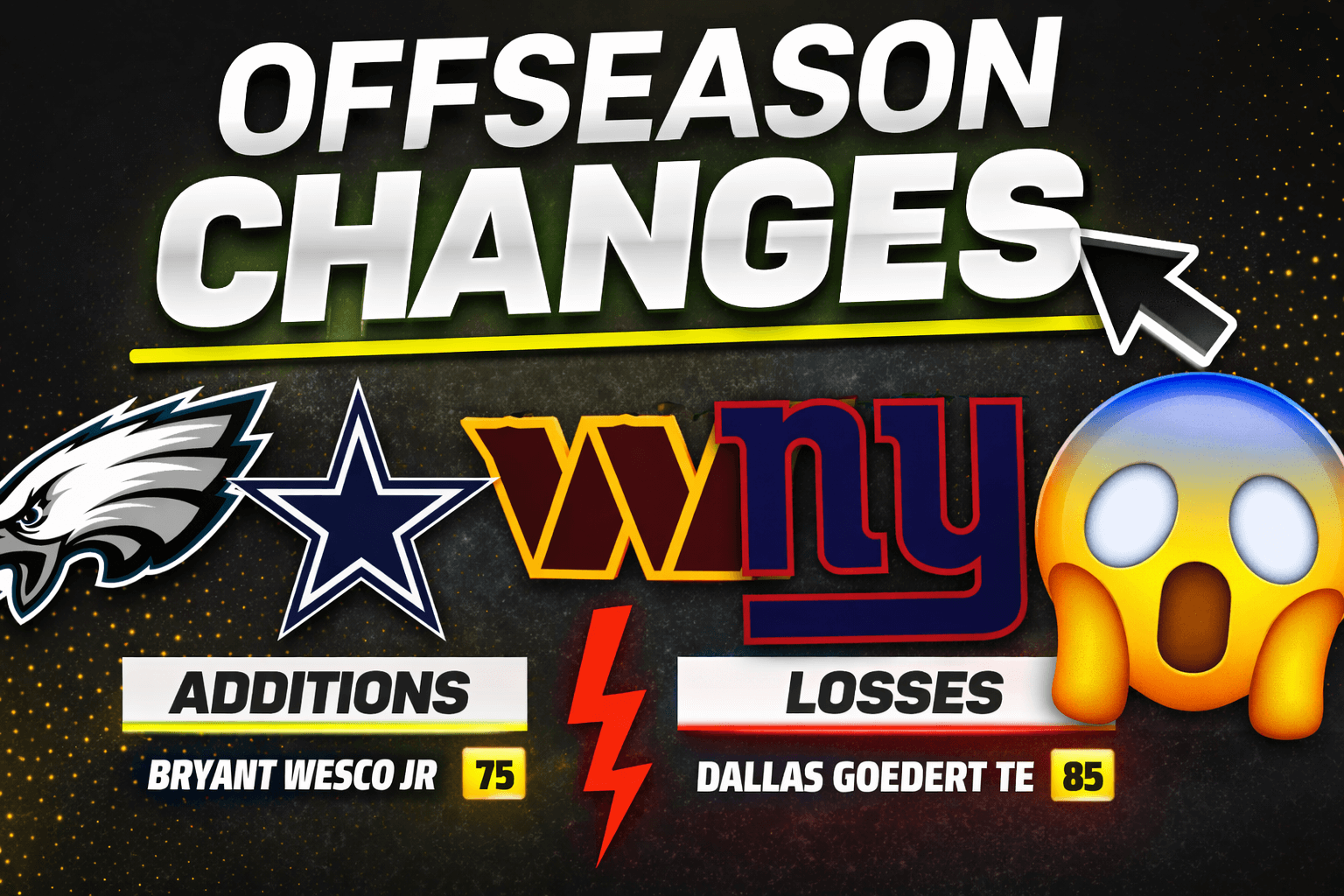

The NFC East rarely sits still, and the PML Season 3 offseason was no exception. Each franchise took a distinct approach, some chasing star power, others leaning into youth, depth, and long-term flexibility. What follows is a team-by-team look at how the division reshaped itself heading into the new season, what those moves signal, and where the pressure points now sit.
Washington Commanders
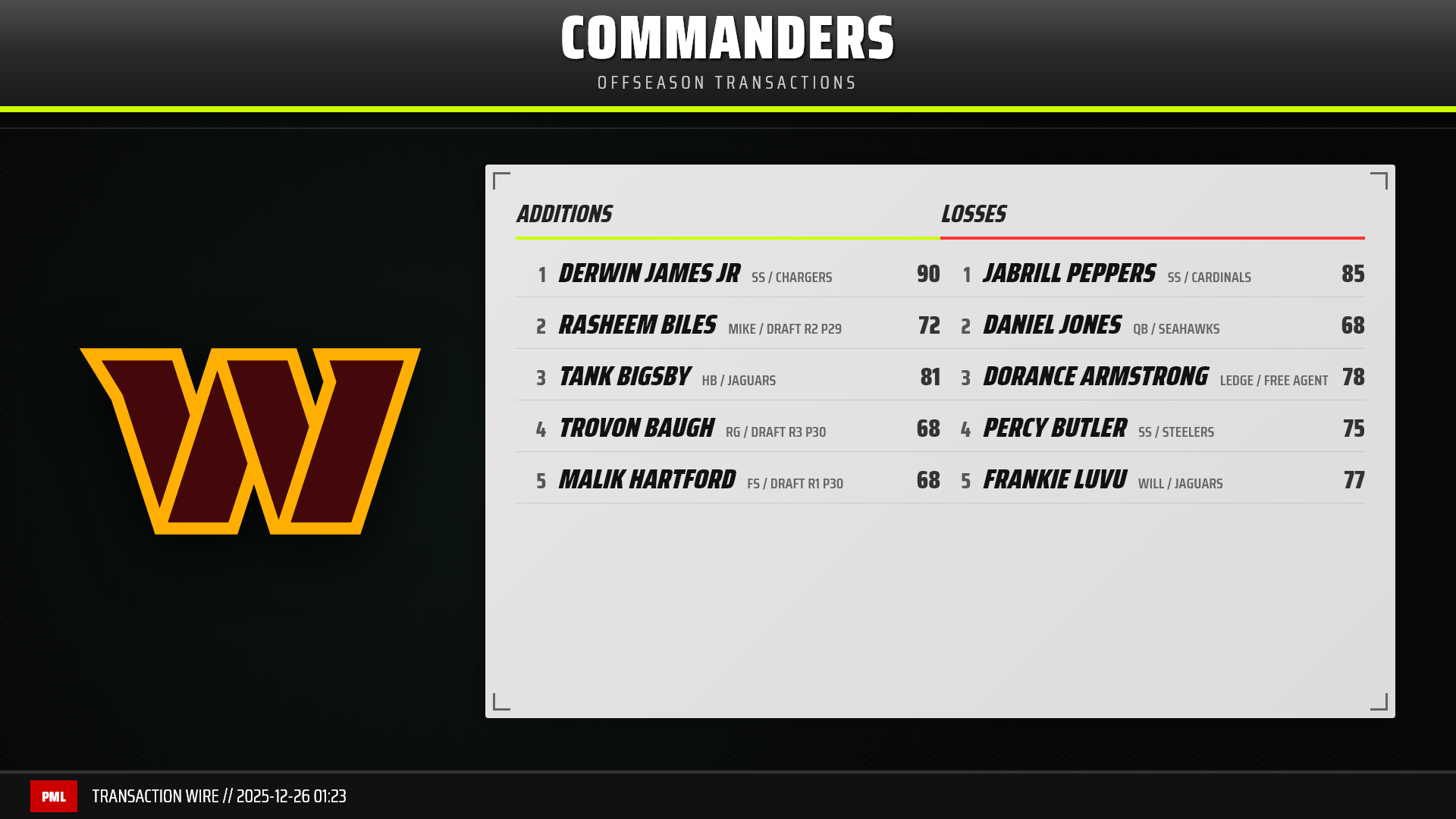
The Commanders entered the offseason with a clear priority, inject experience into the defense while adding functional depth across the roster. The headline move was the acquisition of Derwin James Jr., a true tone-setter in the secondary. Replacing Jabrill Peppers with James is not a lateral move, it is a statement. Washington wanted leadership, versatility, and a player offenses must account for before the snap.
On offense, Washington quietly rebuilt its running back room. Tank Bigsby and Jerome Ford give the Commanders two different styles, one built for contact and the other for space. Rashid Shaheed adds vertical speed at wide receiver, something this offense previously lacked. The draft was used heavily on defense and the trenches, with multiple rookies added at linebacker, edge, and along the offensive line.
The losses were meaningful. Peppers, Frankie Luvu, and multiple veterans in the secondary walked, leaving less experience behind the scenes. Daniel Jones departing at quarterback closes the book on a transitional experiment, pushing the Commanders fully toward their current QB direction.
Outlook: Washington looks tougher, faster, and more aggressive on defense. The risk is youth at key spots, but the upside is one of the higher ceilings in the division if development clicks early.
Dallas Cowboys
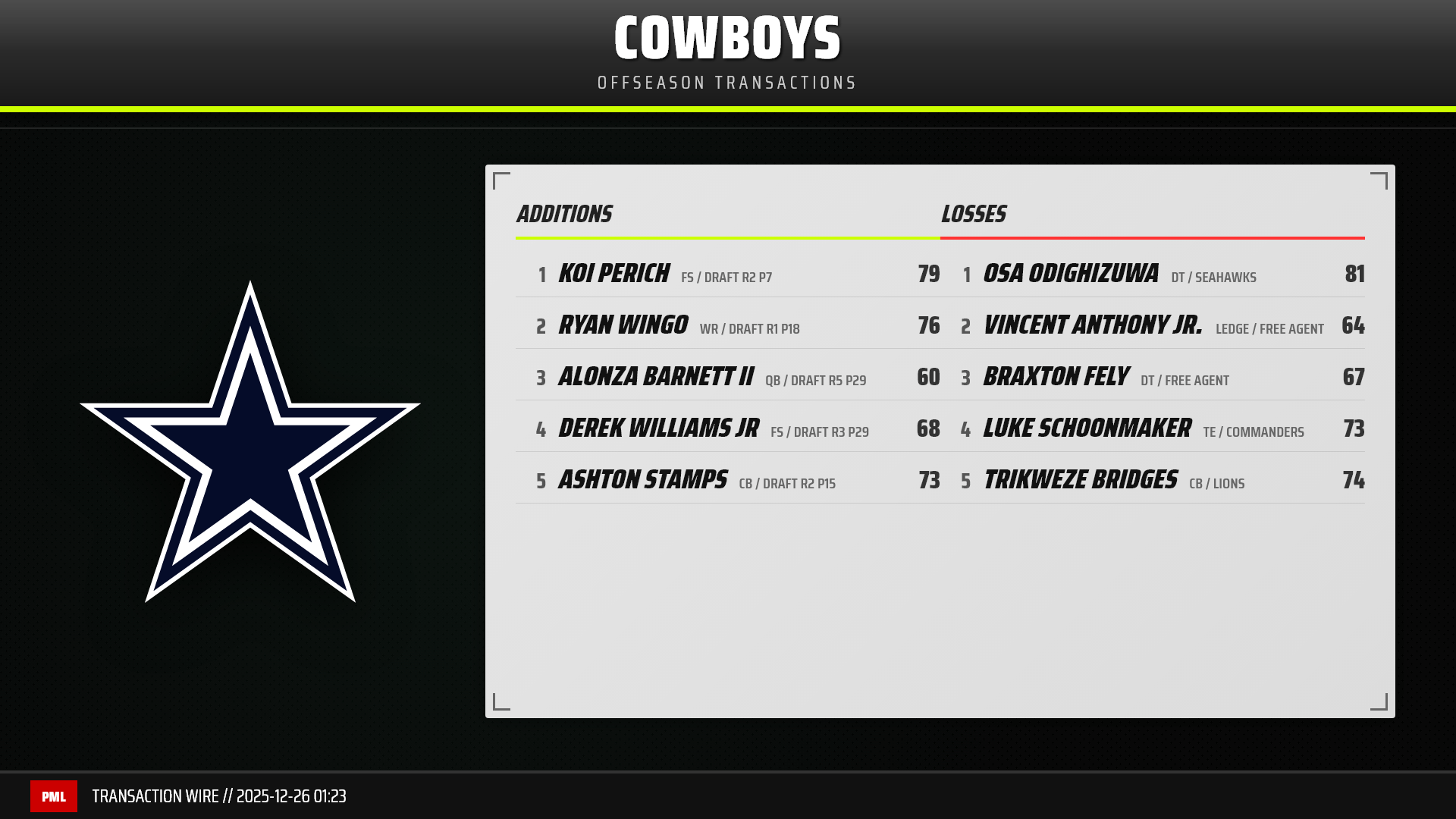
Dallas leaned hard into youth and volume. No team in the division added more raw assets, especially through the draft. The Cowboys invested heavily in the secondary, adding multiple safeties and corners, highlighted by rookie Koi Perich and veteran Tyrique Stevenson. This is a clear attempt to modernize a defense that struggled against explosive plays late last season.
At quarterback, Dallas took a scattershot approach, drafting multiple young passers rather than committing to a single future plan. It is a bet on competition, not certainty. Ryan Wingo brings instant juice to the receiver room, while the interior defensive line was restocked with several young bodies after losing Osa Odighizuwa.
The losses tell a story too. Odighizuwa, Schoonmaker, and multiple rotational defenders departing means Dallas will rely on rookies early, whether they are ready or not. Depth was sacrificed in favor of flexibility and cost control.
Outlook: The Cowboys are younger, faster, and far less proven. This roster could surprise early if the secondary gels quickly, or it could struggle if rookie mistakes stack up. Dallas is betting on growth, not safety.
New York Giants
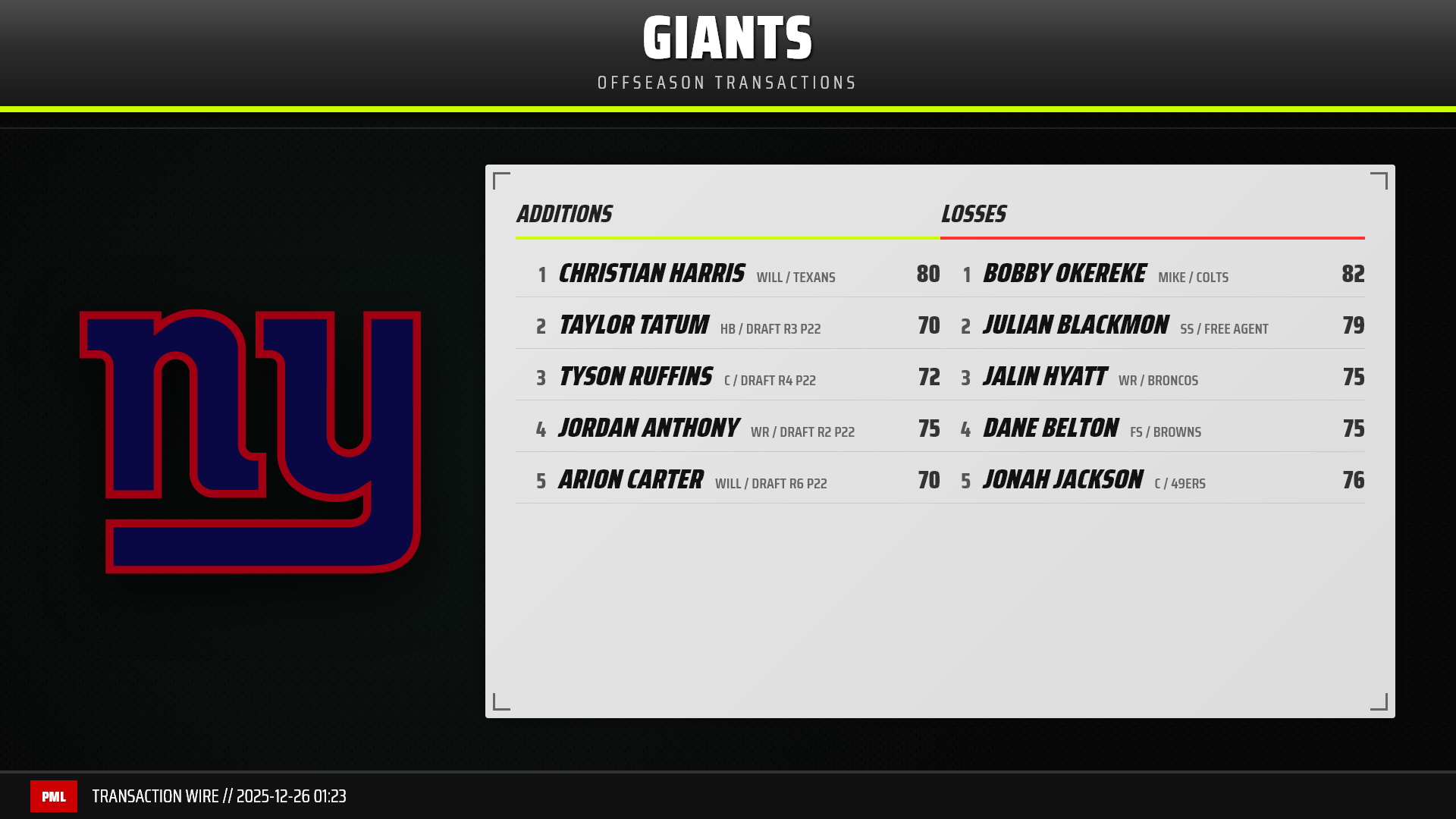
The Giants had one of the more balanced offseasons in the division. They replaced key losses with targeted additions rather than flooding the roster. Christian Harris steps in immediately as a defensive centerpiece after Bobby Okereke’s departure. Andrew Van Ginkel adds versatility and experience to the linebacker group, stabilizing the second level of the defense.
Offensively, the Giants focused on supporting the skill positions. Jordan Anthony and Dyami Brown reshape the receiver room after losing Jalin Hyatt, while Taylor Tatum adds a young runner with upside. Marcus Mariota arrives as a veteran quarterback option, not a savior, but a stabilizer.
The offensive line saw turnover, with Jonah Jackson and Jon Runyan departing. That puts pressure on rookie center Tyson Ruffins to develop quickly. The Giants also lost depth in the secondary, thinning out experience on the back end.
Outlook: New York feels steadier, not flashier. The roster is better balanced than last season, but success will hinge on how fast the offensive line holds up and whether the new receivers can separate consistently.


Philadelphia Eagles
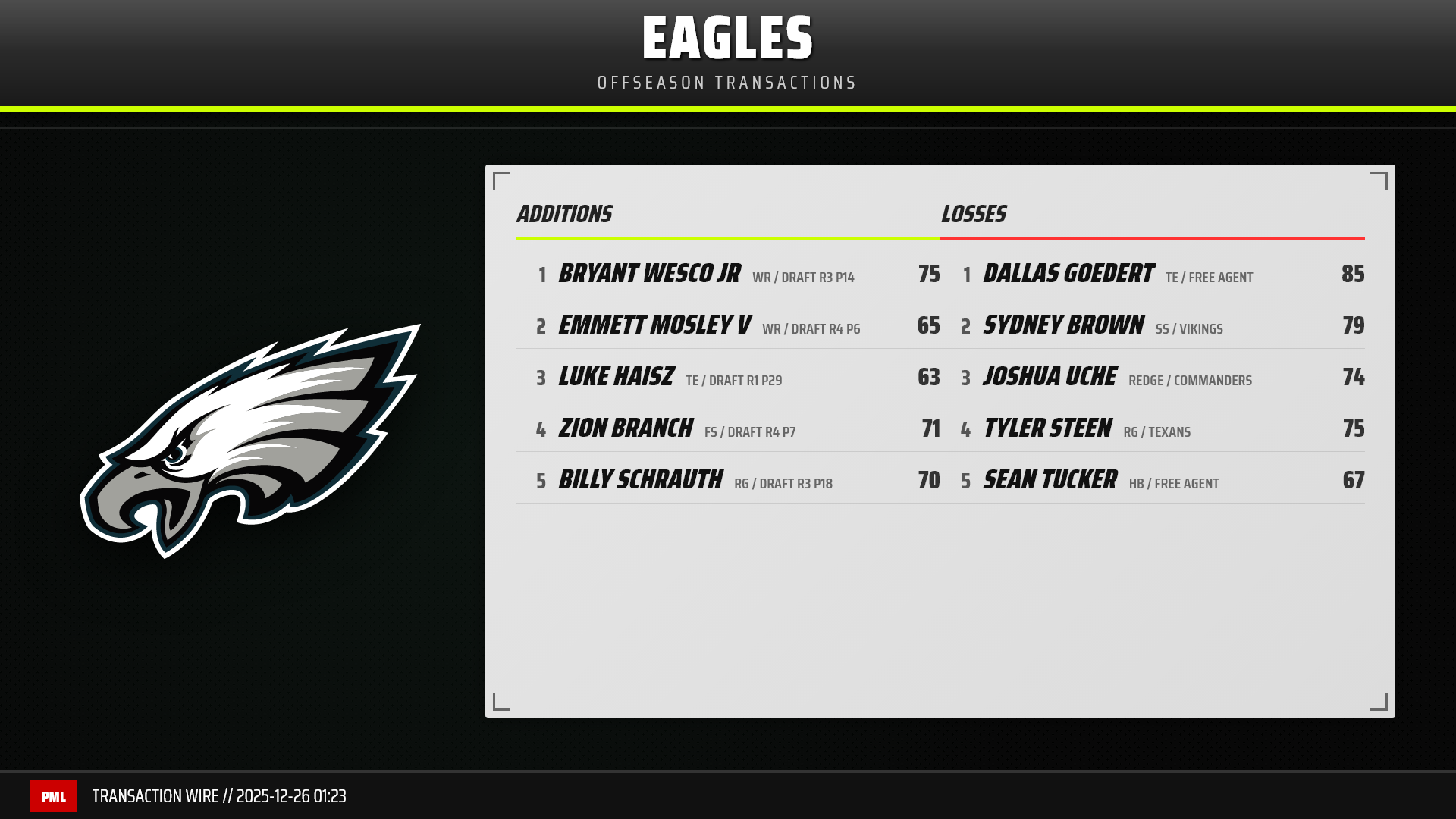
Philadelphia’s offseason was defined by one unavoidable reality, the end of the Dallas Goedert era. Losing a top-tier tight end reshapes the entire offensive identity. The Eagles responded by drafting Luke Haisz and stockpiling young receivers, clearly pivoting toward a youth movement on offense.
Bryant Wesco Jr. headlines that group, bringing athleticism and long-term upside. The Eagles also invested in the interior offensive line, adding multiple rookies to reload rather than rebuild. On defense, the additions were quieter, focusing on depth rather than stars.
The losses were heavy. Goedert, Sydney Brown, and Za’Darius Smith all departing removes leadership from three different levels of the roster. That leadership void is real, even if the cap flexibility it creates is useful.
Outlook: Philadelphia is transitioning. This is not a roster built for comfort, it is built for growth. Early inconsistency is likely, but the long-term vision is clear if the young offense develops together.
Division-Level Takeaway
The NFC East in PML Season 3 feels less top-heavy and more volatile than in prior years. Washington chased impact talent. Dallas chased volume and youth. New York chased balance. Philadelphia chased a reset.
No team ran away with the offseason on paper. That means the division will likely be decided by development speed, not star power. In a league where progression matters and patience is tested weekly, this NFC East race feels wide open.